childhood is not equally free for all children.
some children get:
camps
schedules
structured activities
time blocks
adult‑designed “fun”
other children get:
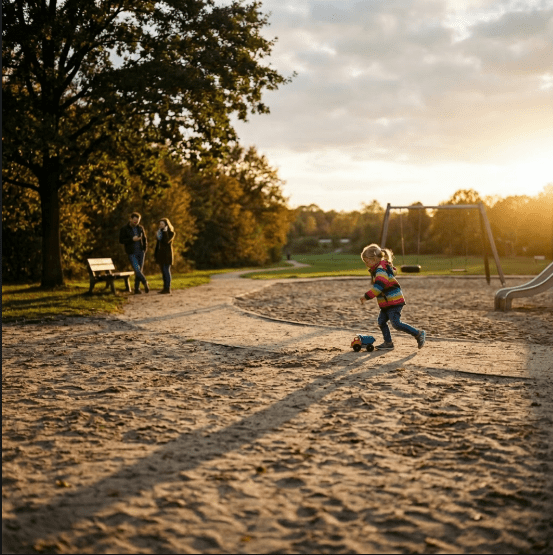
the playground
open time
unstructured play
freedom to be
and ironically, the children with less money often get more childhood.
it’s sad, because it feels like parents shoo their children away to these places —
not because the children want to go,
but because the adults don’t have time,
or don’t have capacity,
or don’t want the “noise,”
or because society expects it,
or because it’s what they themselves went through
and assume their children should too.
and sometimes, it’s not even about time —
it’s about fear.
fear of being judged.
fear of being seen as “not doing enough.”
fear of being labelled poor if they can’t afford the camps,
or rich and privileged if they can.
some parents send their children to every activity because they want to show they’re providing “the best,”
others struggle financially just to keep up with the image,
and children grow up absorbing these messages —
believing they missed out because their parents were poor,
or believing they were “better” because they could afford it.
all of it is society’s fantasy, not childhood’s truth.
children notice this.
they notice everything.
they notice when a parent is rushing.
they notice when a parent is overwhelmed.
they notice when their presence feels like an interruption.
and so they go — to camps, to programmes, to activities —
not always because they want to,
but because it feels like the better option
than sitting beside an adult who seems uncomfortable with stillness.
and the painful part is, play is treated like something useless,
something that needs to be replaced with “learning” or “doing something productive.”
as if being a child isn’t already enough.
as if joy isn’t useful.
as if imagination isn’t a kind of intelligence.
as if presence isn’t a kind of wisdom.
sometimes it feels like the playground becomes the space for the children who aren’t signed up for camps —
the ones who can’t afford them, money‑wise,
not the ones whose parents intentionally choose unstructured time.
and you can see the difference:
the children who arrive with no clock pulling them away,
and the children who arrive already half‑gone,
already thinking about the next scheduled thing.
freedom becomes a privilege too.
and maybe part of growing as parents — and as people — is noticing when we’re living on autopilot.
we inherited routines from our own families, and many of them helped us survive.
but life is moving faster than our bodies can keep up with, and sometimes we forget to breathe, to pause, to notice the small things.
children have a way of slowing us down, not to inconvenience us, but to teach us something we didn’t know we needed.
the irritation we feel, the impatience, the rush — sometimes that’s the lesson.
sometimes the child is the reminder.
and even in busy lives, even with bills and responsibilities, there is always a small place to soften, a small moment to sit beside a child and let time stretch again.
not to fix anything, not to perform anything — just to be human together.
 childofafricansoil
Leave a comment