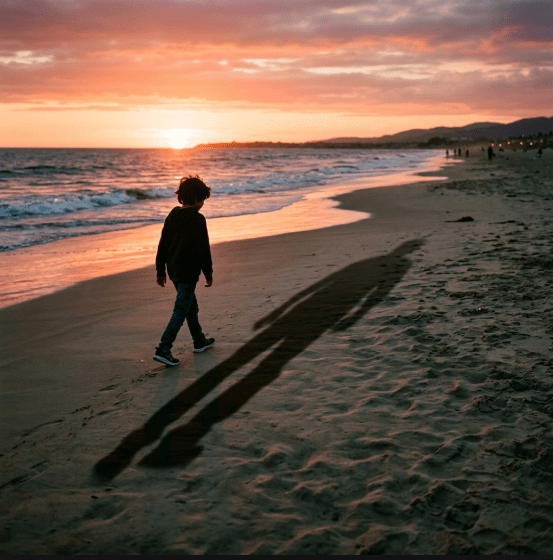
children grow —
but mostly in height,
and in memorised content.
and somehow we call that “growth,”
as if repeating information is the same as becoming whole.
as if passing exams is the same as maturing.
as if adulthood is simply the next level you unlock.
children look at adults and think adulthood is freedom —
freedom to do whatever you want,
whenever you want,
however you want.
but that’s just an idea they mistake for a fact.
because once they arrive,
they realise it’s not what it looks like.
there are so many children in adult bodies —
adults who don’t know how to be adults
because they were never nurtured to grow emotionally or mentally.
they were only trained to perform.
we keep repeating the same patterns,
copying what worked for previous generations
and treating it like gospel —
no questions asked.
so we end up with children raising children,
repeating the same cycles
but expecting different results —
and wondering why nothing works,
why the same patterns keep returning,
why the same wounds keep reopening.
and instead of looking inward,
instead of questioning the systems we inherited,
we blame the government,
the schools,
the economy,
the world —
anything but the patterns living inside our own homes.
and in every cycle,
there’s always someone who wakes up,
someone who realises something isn’t right
and tries to correct it.
but children often see this correction as strictness,
as control,
as “my parents don’t let me be free.”
because they compare notes with their friends —
friends they meet every day at school,
not by choice,
but by the conditions of their environment.
they see what other children are allowed to do,
what they get away with,
what freedoms they have,
what boundaries they don’t.
and suddenly guidance feels like punishment,
structure feels like oppression,
and love feels like limitation.
they don’t realise that every household
is its own universe,
with its own wounds,
its own history,
its own attempts at doing better.
children don’t see the intention —
they only see the difference.
so they promise themselves that when they have children,
they’ll do the opposite.
they’ll give total freedom:
freedom to eat sugar whenever they want,
freedom to play video games all day,
freedom to stay up past midnight,
freedom to consume any content,
freedom to buy everything they desire,
freedom to own five devices,
freedom to have twenty pairs of shoes.
free to be free.
but are they really free?
look at society now —
teenagers and young adults exhausted,
unmotivated,
lost,
slipping into depression and anxiety.
we medicalise behaviours that could have been softened
with proper nurturing,
proper guidance,
proper emotional education.
and so the current generation grows up thinking this is normal —
because their friend has it,
and the friend of their friend has it,
and suddenly it looks like everybody has it.
so nothing feels out of place.
nothing feels worth questioning.
everything looks “perfect” on the surface.
and the solution becomes automatic:
take pills for the rest of your life,
and if this one doesn’t work,
they’ll switch it at the hospital.
or worse —
people stop taking responsibility for anything at all.
they blame the “disease,”
the label,
the diagnosis,
as if it explains every choice,
every reaction,
every behaviour.
they are burnt out
and seeking guidance from adults
who are just as lost as they are.
the only difference is that some adults
have read a phrase or a theory somewhere
about how to cope —
but they only have the words.
the action is still a mystery.
and you can’t blame them entirely.
they’re running on the same system
that raised them.
so the teenager hears,
but doesn’t listen —
because there’s no action to back it up.
the adult wishes for a miracle,
a reset,
a return to factory settings.
they’re exhausted too.
they don’t know what they’re doing,
but they know the children are watching them.
and that alone is pressure.
some adults accept they don’t know.
some push harder,
pretending they do.
children pick up on both —
because the subconscious mind registers everything.
and so they grow up with mixed emotions,
unsure whether to pretend
or surrender
and learn a new way.
this is our society.
and maybe the real work now is learning how to grow up on purpose, not by accident.
 childofafricansoil
Leave a comment