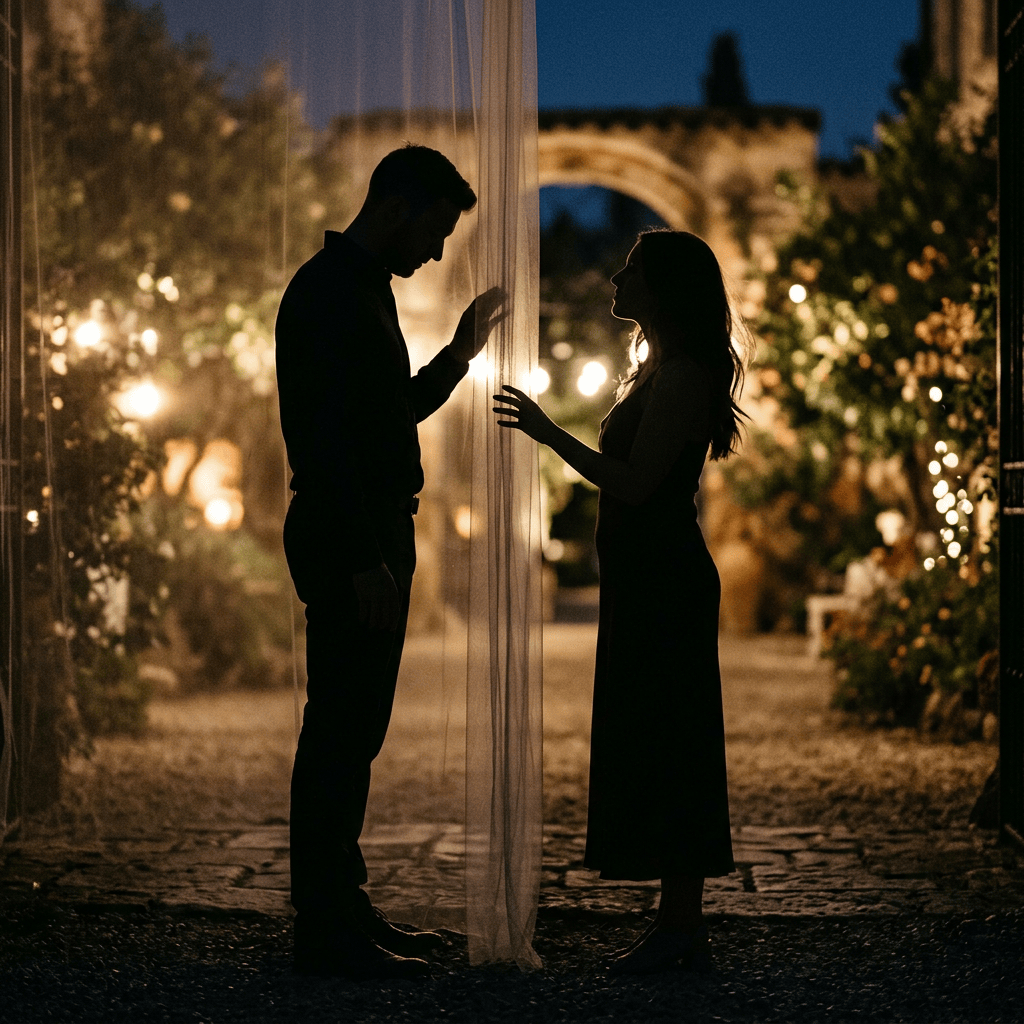
we grew up learning love from places that were never meant to teach us.
movies, music, porn, celebrity culture —
edited, directed, perfected worlds
where characters perform emotions written by someone else.
and without knowing it,
we absorbed these performances as truth.
we mistook scripted affection for genuine connection,
and carried those illusions into our real relationships.
we started looking for partners who moved, spoke, dressed, listened,
and expressed affection like the characters we consumed.
perfect timing, perfect confidence, perfect fantasy.
we inherited ideas of
“this is what women do”
and
“this is how men should be”
from worlds built for cameras, not for real life.
so when we meet each other,
we rarely arrive as our raw, honest selves.
we show up carrying the same borrowed expectations,
the same curated identities,
the same longing to be seen
in the ways we learned from fiction.
we bond quickly —
not because we’re showing our truth,
but because our performances match.
it feels familiar,
safe,
almost like being understood.
but it isn’t our real selves connecting.
it’s our masks recognizing each other.
for the first half of the relationship,
we walk on eggshells —
careful, curated, performing the version
we hope will be chosen.
then comfort arrives,
and the mask begins to slip,
slowly, quietly, almost accidentally.
sometimes we fall in love
with the raw, unedited truth
of who the other person really is.
but most of the time,
we feel trapped, confused,
and a little betrayed —
realizing the person we committed to
was never fully there.
and when truth finally appears,
people respond in different ways.
some stay because a child is involved,
or because culture forbids leaving,
or because the church says endurance is love,
or because society will judge the one who walks away.
some run —
not from the person,
but from the weight of pretending.
some keep performing,
letting movies, music, and trends
decide what their relationship should look like next.
and children grow up inside the chaos
of two people trying to hold together
a story that was never theirs.
pop culture keeps writing new scripts —
the baby mama era,
the baby daddy era,
the curated chaos we now call “modern love,”
normalizing instability
as if it were evolution.
so we must ask ourselves:
are we loving as who we truly are,
or as who we learned to perform?
because it is wiser to walk into love
with your own footsteps —
not the borrowed ones shaped
by movies, music, and pop culture.
love becomes real
only when we show up
as our raw, unedited selves,
not as the characters we were taught to imitate.
 childofafricansoil
Leave a comment